
Scaling to 700,000 Concurrent Connections
Founder @ Crypto-Loot
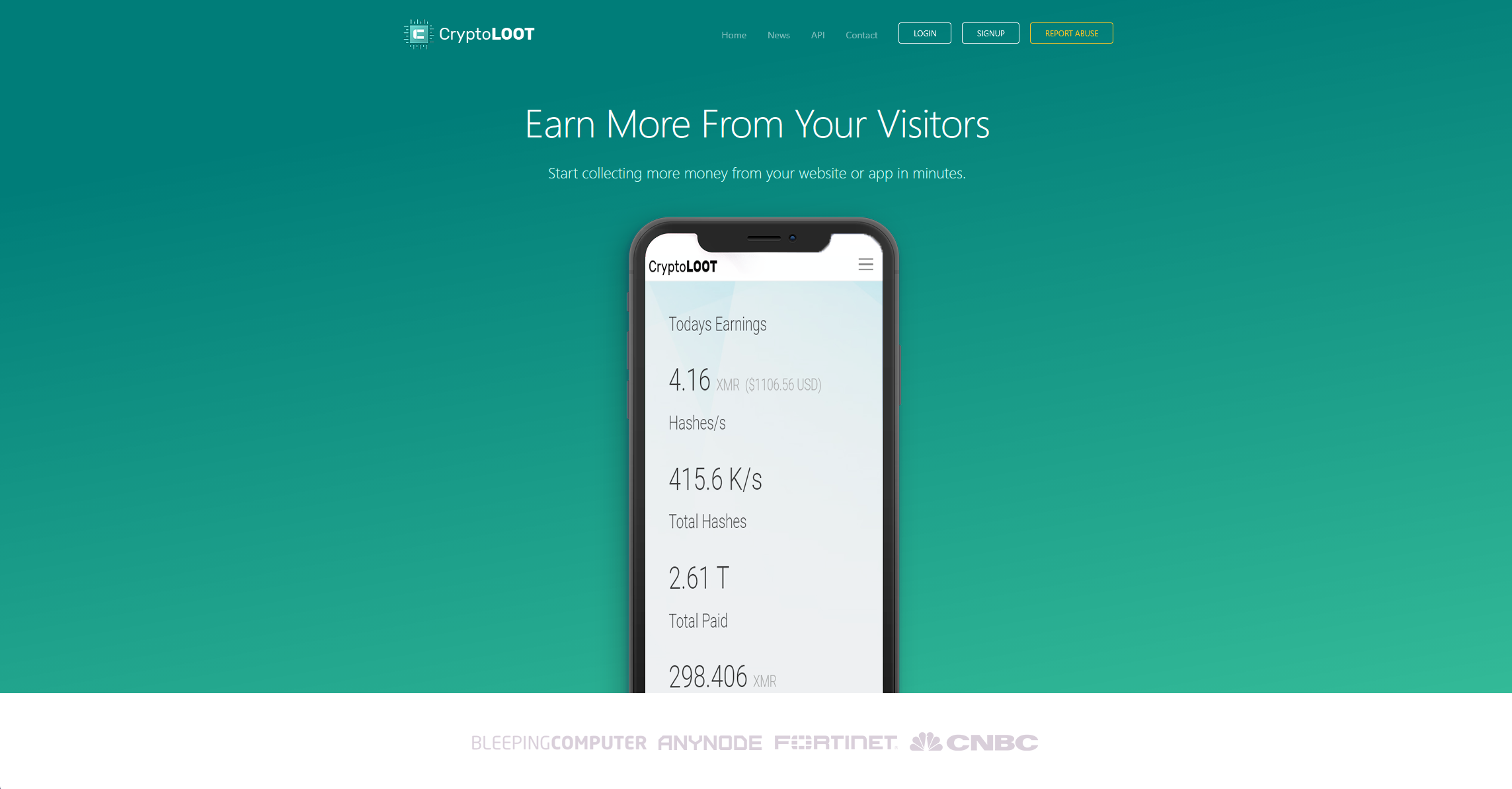
Founded and scaled a browser mining platform to ~700k concurrent connections and ~18% of Monero's network hash rate, self-funded, profitable from the start.
1The Challenge
Web publishers were looking for alternatives to ads, and browser-based crypto mining was emerging as a viable option. The problem wasn't the idea, it was scale.
Browser mining meant handling massive, spiky, unpredictable traffic while staying profitable on razor-thin margins. At peak usage, even small inefficiencies could wipe out earnings or take the entire system down.
What started as a personal learning project around mining and protocol mechanics suddenly became production infrastructure under real-world load.
2The Solution
In 2017, Crypto-Loot started as a hobby. I originally built it to better understand how mining worked at a protocol level and to make participation accessible to non-technical users: no sketchy downloads, no complex configs, just open a browser and learn.
Then Coinhive took off.
I already had the core tech, but they had scale. Instead of competing on raw efficiency, I competed on economics, launching with a 12% fee versus their 30%, and opening the platform to webmasters.
Traffic exploded almost overnight.
The initial system wasn't built for this. Servers went down constantly. Early on, I made every classic mistake: vertical scaling, rushed patches, and firefighting. It became clear the architecture needed a ground-up redesign focused entirely on throughput and cost efficiency.
Over the next month, I rebuilt the platform while it was live:
- •Broke the system into a microservices architecture
- •Rewrote most backend services in Golang for lower latency and better concurrency
- •Optimized stratum proxy behavior for low-difficulty browser shares
- •Designed a tiered share-validation pipeline that selectively verified mining submissions based on historical accuracy, submission patterns, and cost thresholds - reducing verification overhead while preventing invalid or malicious share amplification attacks
- •Introduced Anycast routing so miners connected to the nearest edge proxy and pool region
Because there was no real documentation on scaling protocol-embedded infrastructure at the time, I leaned heavily into the Monero ecosystem: reading source code, joining IRC channels, and collaborating directly with contributors and pool operators. Several of the scaling strategies we landed on came out of real-world experimentation and failed PoCs.
The business stayed lean and profitable the entire time: no funding, no burn, just engineering and iteration.
3Results
- ~700,000 concurrent connections at peak
- ~18% of Monero's total network hash rate at peak
- Top publishers earning five figures per month
- Profitable, self-funded business